Shakespeare published 154 sonnets in his quarto in 1609. While the initial 126 are addressed to a young man, the final 28 are directed toward an enigmatic woman referred to as the dark lady.
I
Marites Bundoc is the author of Filipiniana: A Collection of Philippine Poetry in English. Tess has an MA in Linguistics from WVSU, Philippines, and an MA in Humanities-English from Tiffin University, Ohio. She obtained her BA in Humanities-Comparative Literature from the University of the Philippines. She is currently pursuing her Ph.D. in English at Liberty University, Virginia. She lives in California with her husband Mario and two sweet but forever-hungry felines, Gina and Alita. Her daughter Kay lives in Nebraska.
The Psalms as Poems
by Tess Bundoc
Disclaimer: all scriptures in this post are from the New international version of the Bible.(1)
“Whatever is, has already been, and whatever will be, already is.” – Ecclesiastes 3:15
In one of my classes during my master’s program in the humanities, one of my classmates said that she did not agree with the idea that “there was nothing new under the sun” (Ecc. 1:9), that our ideas are not really original; they were thought of by someone else perhaps even before we were born. The reason why she said this was that she had written and published a book of original poems. Well, I have also written and published a collection of my original poems, my capstone, but somehow, I was influenced by Shakespeare, Keats, Wordsworth, and other poets who lived before me – even by the great Filipino hero Jose Rizal (2), and those poets and writers were also influenced by others before them. That classmate was a retired therapist; she and I were friends who often critiqued each other’s essays, a practice in graduate school to help each other improve our work. That’s the beauty of a free learning environment: you can agree to disagree.
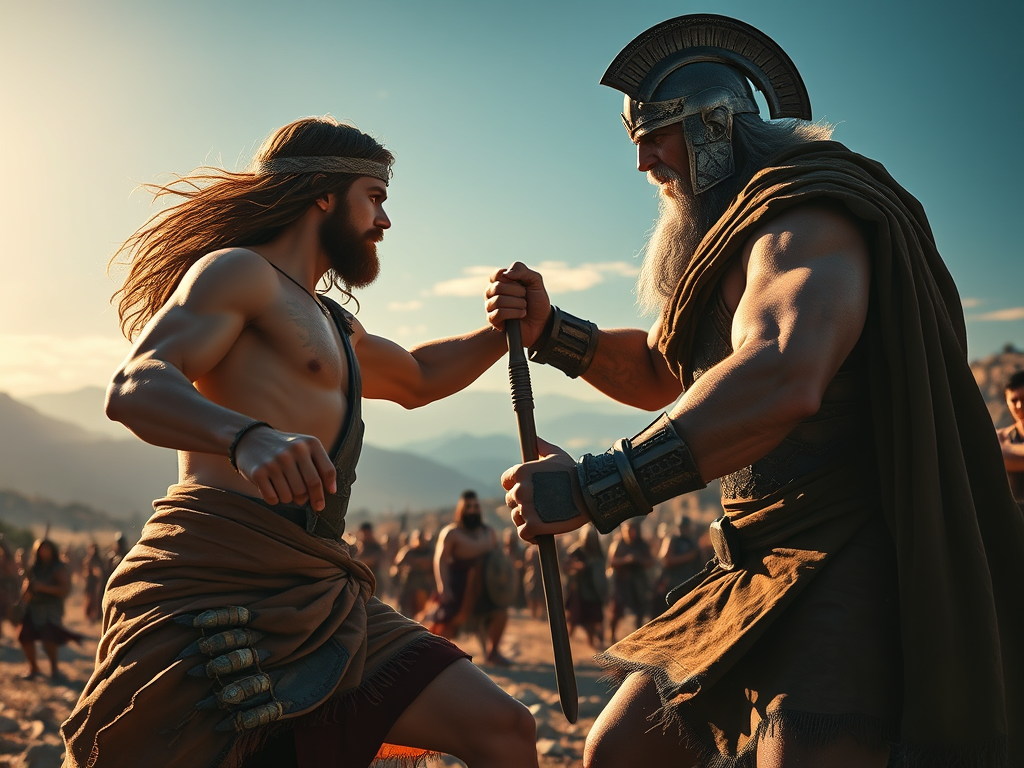
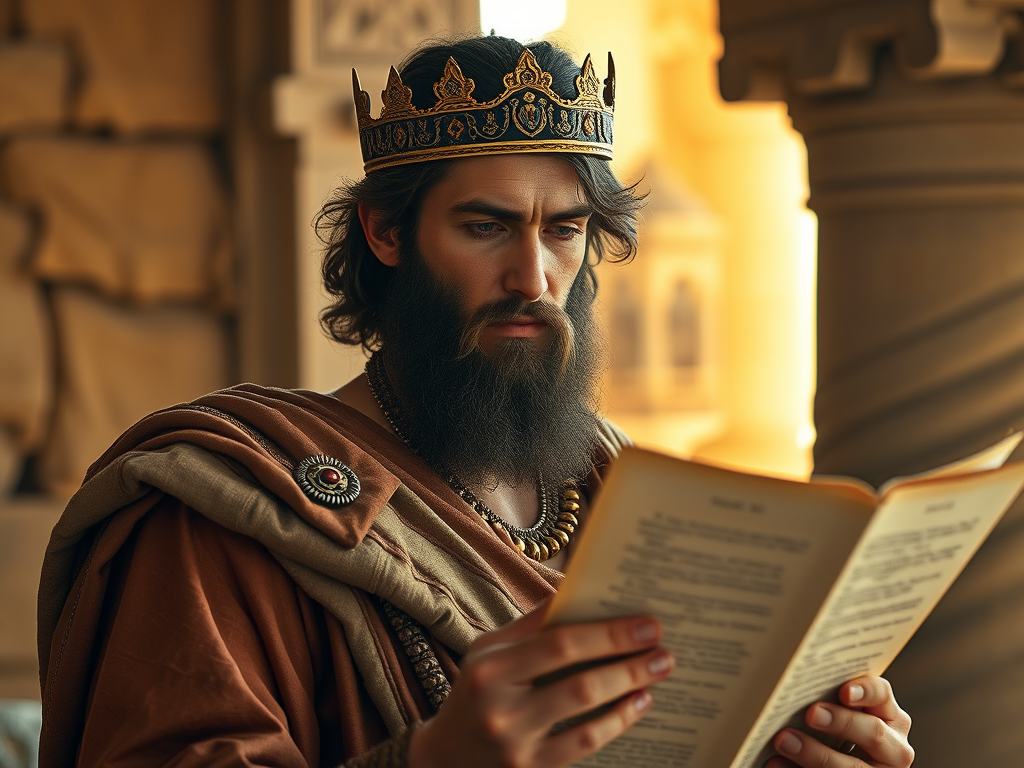
Fast forward to my doctoral program, I was fascinated by the Psalms and their poetry, so I made it a research project in one of my courses. I found that about 70 of the 150 Psalms were written by David [the shepherd boy who killed the giant Goliath in the Old Testament stories] (3). The Psalms were originally composed for worship and singing (4), and they were part of Hebrew poetry, but not just any poems; they were religious poems (5). They were holy and honored among ancient Jews, who recited or sang them in their Psalter (6).
The beauty and value of the Psalms, apart from its aesthetic sound – “heightened speech” (7)- is in their characteristic of being ours – their ideas ours, the words ours, the poets’ experiences our own (8). Professor Joel Baden of Yale Divinity School says that “there is a psalm for everyone in any situation.” After high school graduation, I got sick of viral hepatitis, the fatal kind, and was confined in the hospital for 17 days, in isolation. I was worried because it was almost the start of classes at the University of the Philippines, where I was admitted as a freshman college student. Worse, my doctor told me to rest longer at home because I was very weak.
It was during those days when I chanced to read a tiny book on Psalm 23 (its title or author I can’t recall now). “The Lord is my shepherd,” it said, and that “he lets me lie down in fields of green grass./ He leads me beside quiet waters./He gives me new strength.” The author said that when we are lying down, the only way to look is up. I looked up to heaven and prayed to that shepherd, a metaphor for Jesus who said in John 10:11, “I am the good shepherd. The good shepherd gives his life for the sheep,” the sheep being a metaphor for us. In high scchool English, we learn that a metaphor is a figure of speech that compares two unlike things without the use of “like” or “as.” I prayed to him to give me strength, and he did.
The Psalm also says,”Even though I walk through the darkest valley,/ I will not be afraid./ You are with me.” I realized that I didn’t have to be worried or afraid; he had everything under control. After all, isn’t he the Lord of the universe, its creator(Ps. 46:10)? Jesus gave me a new leash at life, UP extended my admission until the following year, and I enrolled in the Humanities Department, where I majored in Comparative Literature. It was also during my major that I encountered the Hebrew Bible, and I remembered that my late grandmother read her Historia Sagrada to me everyday when I was little. No wonder I love Hebrew literature – I loved my grandmother to death! The story of the chosen people and their poetry became my connection to my beloved grandmother, who I will see again one day.
Since then, the Psalms became my go-to prayer book under almost any situation, and my Shepherd has been with me every step of the way. He wants to be your Shepherd, too, your constant companion, savior, Lord, best friend. Won’t you want to have such a loyal friend and master?
 Let's Journey Through Literature
Leave a comment